In Phoenix, Arizona—beyond the polished edges of Scottsdale and the curated image outsiders often see—there is another story unfolding. It lives in small gyms, in family-run businesses, in long days that don’t end when the workday does. It lives in people like Teresa and Joel, founders of Rhee Clothing Co., a small independent clothing company built not on scale, but on purpose. Their brand doesn’t begin with fashion. It begins with family.

Before Rhee Clothing Co. became a business, it was an idea rooted in legacy. The name itself—“Rhee”—comes from Rhea, the mythological “mother of the gods.” For Joel, the connection was immediate and personal. “We were coming up with names… and I was like, okay, that’s Teresa’s business. She’s the mother of our kids, and our kids are athletes… it just felt fitting.” It wasn’t branding in the traditional sense. It was symbolic. Teresa wasn’t just part of the company—she was its foundation. The name became a reflection of what they were building: something protective, something generational, something that could outlast them. “The ultimate goal is maybe leaving our legacy for our kids.” From the beginning, the company wasn’t about chasing trends. It was about building something meaningful enough to pass down.
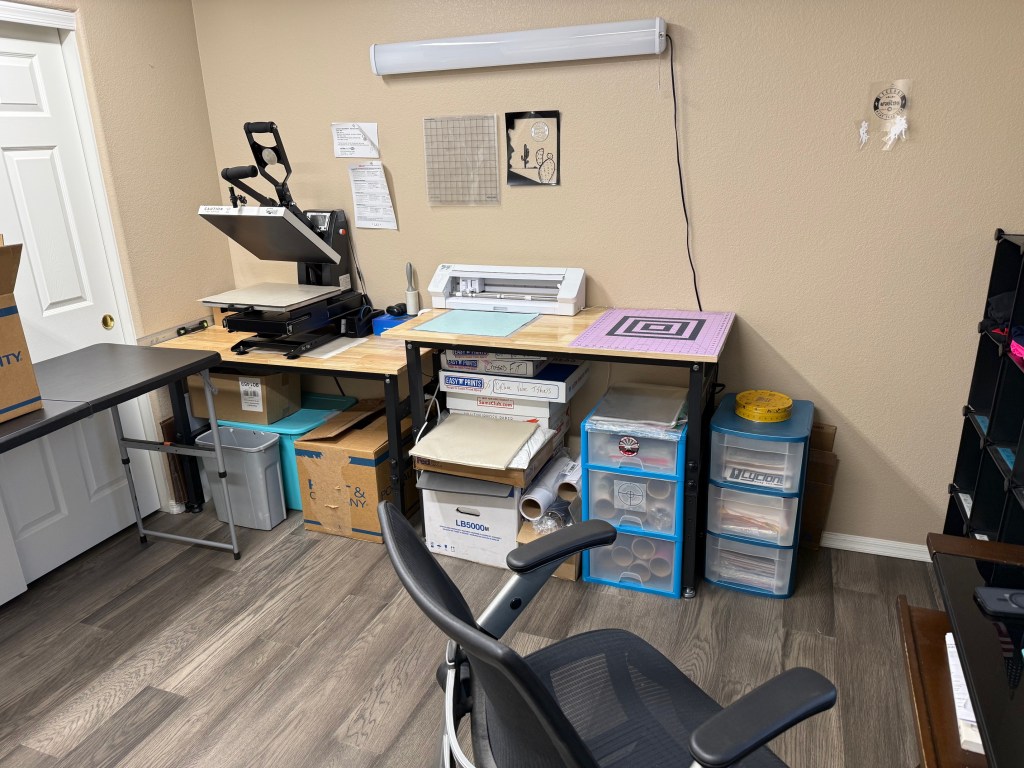
There was no formal training behind what came next. Teresa and Joel built everything themselves—learning through trial, error, and persistence, using whatever tools they had available. “We’re all self-taught… with YouTube and all the resources available, we were able to learn the trade. And we’re still learning.” What looks simple from the outside quickly becomes complicated in practice. “People think, ‘Hey, can you make a shirt for me?’ But it takes more than that. You’ve got to break down the image, size it, adjust resolution, choose the material… there’s a lot behind the scenes people don’t understand.” The process is technical, time-consuming, and often unforgiving. Every decision matters, because every mistake costs money—something small businesses don’t have the luxury to absorb easily. Still, they refuse to compromise. “If there’s even a tiny speck on the design we don’t like, we won’t give that shirt. We’ll remake it. We don’t compromise on quality.” That attention to detail isn’t just about the product. It reflects how seriously they take the people trusting them with their ideas.
Long before the business had a name, though, there was a place that shaped everything that followed: Cyclone Muay Thai and Double Five Jiu-Jitsu in Surprise, Arizona. Teresa and Joel didn’t arrive there as entrepreneurs looking for opportunity. They arrived as parents. Their sons train at the gym, and for nearly seven years, it has been part of their daily lives—after-school practices, time on the mats, time in the ring, routines that gradually became foundational to their family. At the center of that environment is Fabiano “Cyclone” Aoki, a former professional Muay Thai fighter and world champion who now leads the gym, alongside Ismael Aoki, who heads the Jiu-Jitsu program. Together, they’ve built more than a training facility. They’ve built a culture grounded in discipline, consistency, and growth.
That environment shaped their children first. Over time, it shaped Teresa and Joel as well. “That gym has changed our lives… and has changed the lives of our children.” Their kids weren’t just learning how to train—they were learning structure, accountability, and resilience. Watching that happen day after day made an impression. The gym became more than a place they went to. It became a second home. And eventually, without intention at first, it became the starting point of their business.
The first customers weren’t strangers. They were people from the gym—coaches, fighters, other parents who had seen their work firsthand and trusted them before the brand even had a real identity. “Most of our customers are from the gym where our kids go to… that’s our main customer.” What began as small orders slowly grew into something more. A larger order. A bigger opportunity. A moment where the work was no longer just a hobby. “Our first major order was with the gym… and everybody loved the shirts. That’s when we felt like we might be onto something.” That moment mattered, but what followed mattered more. Coach Fabiano continued to believe in them, eventually committing to working exclusively with them. “He finally said, ‘We’re only going to use you guys.’” That level of trust changed the stakes. It wasn’t just about delivering a product anymore. It was about representing something bigger than themselves. “We don’t want to disappoint him… that pushes us to be the best that we can be.”
Inside that same gym, the fighters represent the highest level of that culture. Athletes like Tyler Shaw, who has been training since 2016 and turned professional in 2023, and Benjamin “Ben” Rose, who has competed on regional fight cards including Arizona’s Samurai Soul Championship, step into competitive environments where preparation, discipline and execution are constantly tested. They don’t just train, they represent their gym wherever they go. And when they do, they often wear Rhee. “We’ve seen our shirts in Mexico City… Thailand… California. For a small business, that feels really good.” For Teresa and Joel, that visibility isn’t about marketing. It’s about presence—seeing something they built at home move through the world on people who carry the same values that shaped their business in the first place.
What makes Rhee Clothing Co. different isn’t just the product—it’s the ecosystem around it. Growth hasn’t come from advertising campaigns or large-scale exposure. It has come from relationships, from trust, from word of mouth. “Our customers are everything.” Each order becomes a collaboration, a shared process where ideas are brought in and worked through together. “We tell them, ‘We’re not graphic designers… but let’s see what we can do.’” That willingness to figure things out, to meet people where they are and build from there, has become one of the defining characteristics of the business.
Still, the reality behind the work remains constant. From the outside, it may look simple. From the inside, it is anything but. Every piece requires time. Every order requires problem-solving. Every mistake carries a cost. “It’s very, very time consuming… people don’t realize how much time it takes to run a business.” Financially, the company is still building. “We’re still in the red… every penny that we make, we reinvest.” There are no shortcuts, no safety nets, no guarantees. When something goes wrong, they absorb it. “When we mess up, we take the hit… it’s part of the process.” And yet, what stands out is not the difficulty, but how they respond to it. They don’t step back. They double down—on quality, on effort, on learning how to do something better the next time.
That mindset comes from the same place everything else in their story comes from. In the gym, you don’t walk away from a challenge. You face it, you adapt, you improve. That same mentality carries into the business. Custom shirts turn into more complex design work. Design challenges turn into new skills. And over time, those small adjustments build into something larger. But even that growth isn’t the point. For Teresa and Joel, this was never just about building a brand. It was about building something for other people. “We’re just the vessel to bring your idea to life.” That perspective shifts everything. The design doesn’t belong to them—it belongs to the person who imagined it. “We want them to feel as proud wearing it as we felt making it… like, ‘this was my idea.’” What they create becomes more than clothing. It becomes something personal. Something owned. Something remembered.
At its core, Rhee Clothing Co. is not about fabric. It is about continuity. It is about building something that connects parents to their children, fighters to their gym, and a community to the people who represent it. It comes back, ultimately, to the same idea that started everything. Legacy. “This is ultimately more for them than it is for us.” Their children train in that gym, growing within an environment that shapes them every day. And alongside that, their parents are building something of their own—something those same kids may one day inherit, expand, or carry forward in spirit. That is the full circle. The gym builds the kids. The kids shape the family. The family builds the business. And the business gives back to the same community that made it possible. “It’s not always about the dollar bill. It’s about doing the right thing and giving back.”
Rhee Clothing Co. is more than a clothing company. It is a reflection of a gym, a product of a community, and a legacy still being built—one shirt, one fighter, one family at a time
 Bleu de minuit